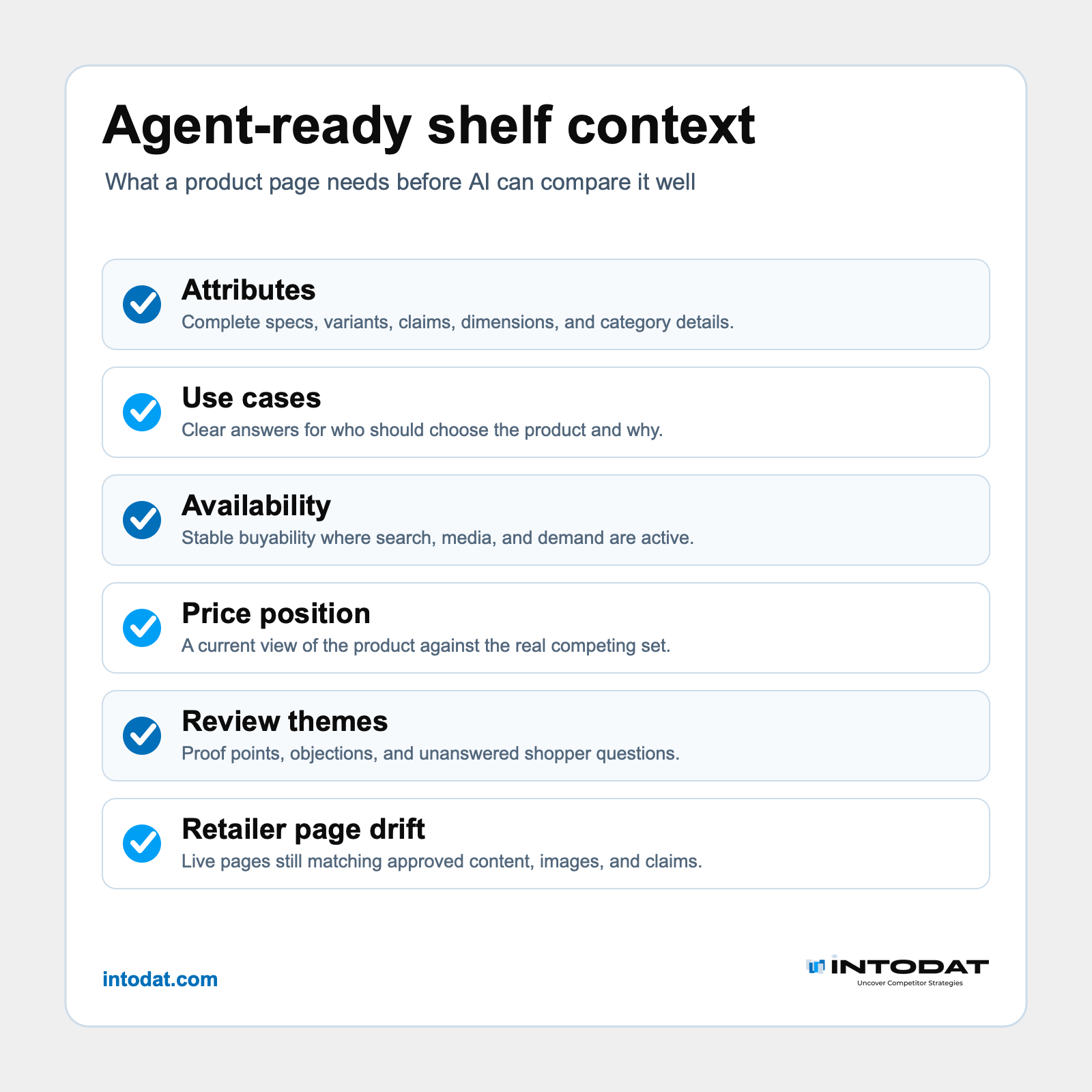
AI shopping is changing how product pages are used.
For years, the product detail page had one obvious audience: the shopper. The job was to earn the click, explain the product, build confidence, and move the shopper toward purchase.
That still matters. But the page now has another audience too.
Retailer search systems read it. Marketplace algorithms read it. Review summaries read it. Retail media systems send traffic to it. AI shopping assistants may use it to compare products, answer shopper questions, or decide which options deserve to be shown.
That means product context has to be both human-readable and machine-readable.
What agent-ready really means
“Agent-ready” sounds like a new technical category. For most brands, it starts with old-fashioned shelf discipline.
Can the page explain who the product is for?
Can it describe the use case in plain language?
Are the title, bullets, images, specs, and enhanced content saying the same thing?
Are product attributes complete enough for filtering, comparison, and recommendation?
Is availability stable in the locations where demand is being created?
Do reviews reinforce the promise, or do they reveal an unanswered objection?
Is the product price positioned clearly against the competing set?
These are not abstract AI questions. They are digital shelf questions.
The gap is operational
The hard part is not writing one better PDP. The hard part is keeping important PDPs accurate across retailers while price, stock, content, reviews, and competitor moves keep changing.
A brand may have approved product content internally, but the retailer page can still drift. A title changes. A key image disappears. A variant goes out of stock. A competitor improves its page. Reviews start repeating a concern the PDP does not answer. Retail media keeps spending against a product that is no longer ready to convert.
In an AI-assisted shopping environment, those gaps matter more. The system helping the shopper has to compare what is available, clear, trusted, and relevant right now.
What to monitor first
Mid-market brands do not need to boil the ocean. Start with the SKUs and retailers that carry the most commercial weight.
Track the basics:
- Search visibility for priority keywords
- Availability by retailer and region
- Price position against the real competitor set
- Content completeness and retailer page drift
- Image presence and mobile clarity
- Ratings, review themes, and unanswered objections
- Retail media traffic landing on weak or unavailable products
Then turn monitoring into a weekly habit. What changed? Why does it matter? Who owns the fix? Did the fix improve the shelf?
That operating rhythm matters more than a one-time AI readiness deck.
The practical takeaway
AI commerce will not make digital shelf fundamentals less important. It makes them less forgiving.
If your product context is vague, incomplete, outdated, or disconnected from shelf reality, AI has a weaker answer to give. If your page is clear, current, and commercially grounded, you give both shoppers and machines more reasons to choose you.
Agent-ready product context starts with a shelf that is worth reading.
Want to see where your priority SKUs may be leaking demand? Start with Intodat’s free Digital Shelf Snapshot.