AI shopping is becoming the loudest commerce story of 2026. Google, PXM platforms, payments companies, and retail technology vendors are all talking about agentic commerce: software that can help shoppers compare products, make choices, and eventually transact with less manual searching.
That matters. But it does not make the digital shelf less important.
It makes the digital shelf harder to ignore.
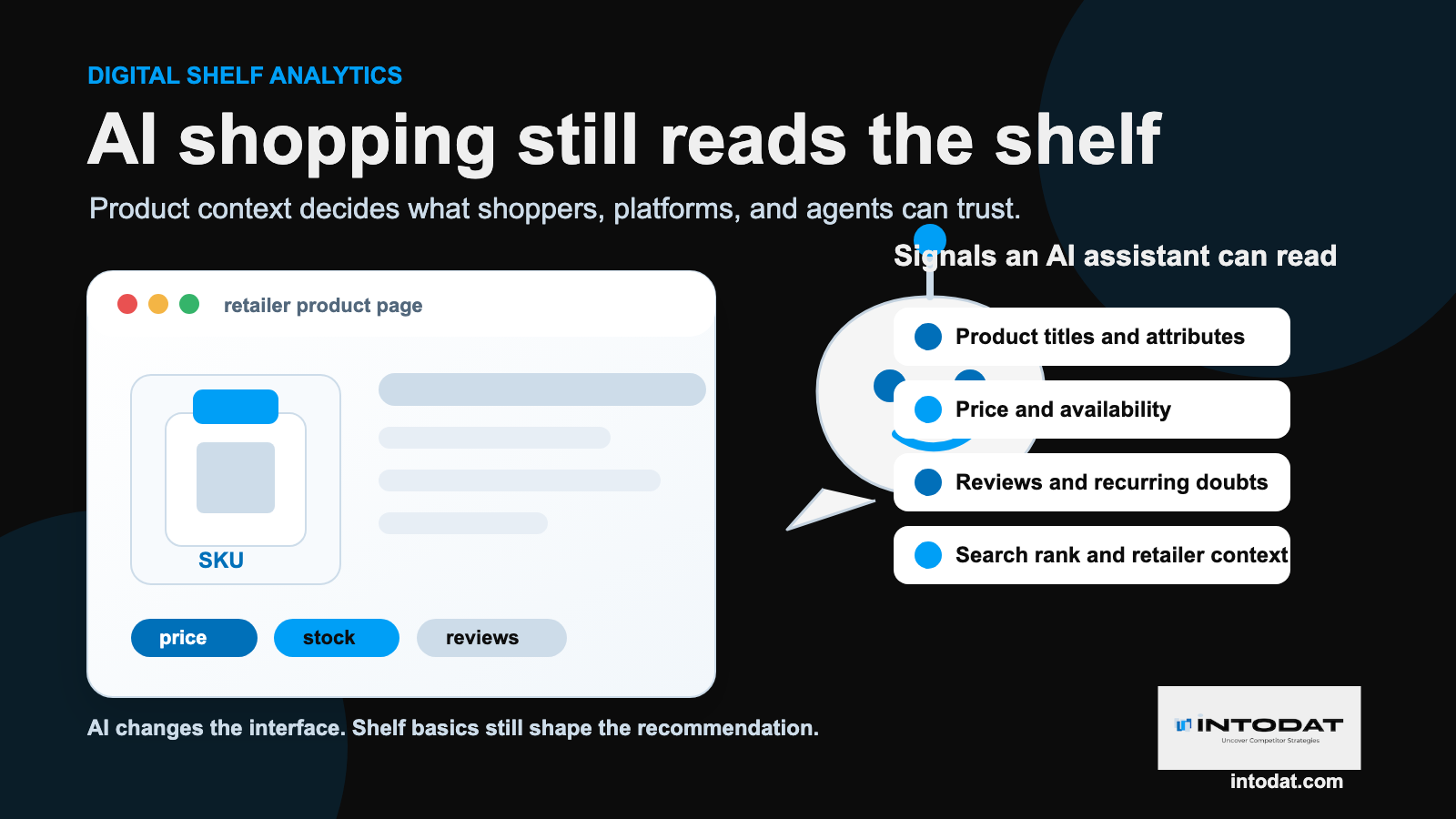
AI shopping systems still need inputs. They read product titles, attributes, descriptions, reviews, pricing, availability, search placement, and retailer-specific product pages. Those are the same signals shoppers already use when they compare products across Amazon, Walmart, grocery apps, marketplaces, and DTC sites.
The interface may change. The evidence does not disappear.
For brand teams, this creates a practical problem. If product content is inconsistent across retailers, if a high-priority SKU is out of stock in one market, if images are outdated, or if pricing looks uncompetitive next to a rival, AI can compress those issues into a recommendation faster than a human shopper would.
That is the uncomfortable part. AI does not only help brands scale good product context. It can also scale bad context.
Retail media has the same dependency. A brand can pay for traffic, but if the shelf underneath the ad is weak, the spend has to fight friction: poor content, low availability, weak search position, thin reviews, or retailer pages that do not match the campaign promise.
So before asking how to optimize for AI shoppers, brands should ask a more basic set of questions:
- Can we see how our products appear across priority retailers this week?
- Do our product titles, attributes, and claims match across markets?
- Are hero SKUs in stock where campaigns are running?
- Which competitors are gaining search visibility?
- Where are reviews, images, or descriptions creating doubt?
This is where digital shelf analytics becomes operational rather than cosmetic. It gives teams a current view of what shoppers and machines can actually see.
At Intodat, we track that retailer reality: availability, pricing, content quality, ranking, reviews, and competitor context across the shelves that matter. The goal is not to chase every AI-commerce headline. The goal is to make sure the product evidence is accurate before it gets interpreted by humans, platforms, or agents.
AI shopping may change the path to purchase. Shelf basics still decide what that path is built from.
Want to see what your products look like across real retailer shelves? Request a free Digital Shelf Snapshot from Intodat.